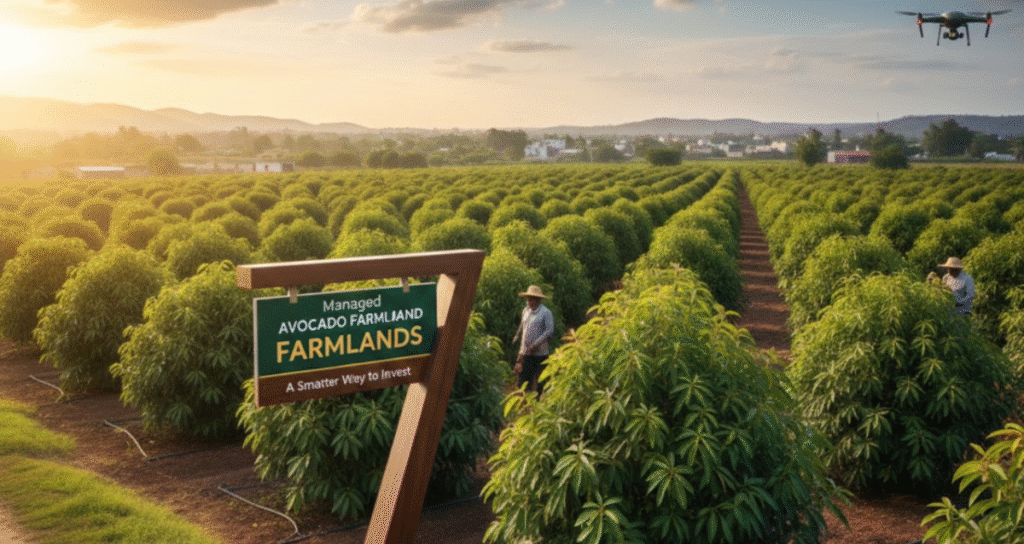
Avocado farming is rapidly emerging as one of the most profitable horticulture opportunities in India. With rising health awareness, premium pricing, and growing demand from urban markets, avocados have become a high‑value crop for long‑term investors. However, successful avocado farming is not just about planting trees—it requires time, expertise, consistent management, and on‑ground presence.
This article explains the 7 essential steps involved in avocado farming, the real challenges of managing farmland independently, and how Dhanveda Farmlands offers a fully managed farmland investment model that delivers returns with minimal effort from investors.
Step 1: Selecting the Right Location & Climate
Avocados thrive in moderate tropical to subtropical climates with well‑distributed rainfall and protection from extreme heat or frost. In India, regions with:
- Good elevation and airflow
- Mild temperatures
- Reliable water sources
are ideal for long‑term avocado cultivation. Land selection alone can take months of research and site validation.
Independent challenge: Identifying fertile land with long‑term appreciation potential and crop suitability requires local expertise and field analysis.
Step 2: Soil Testing & Land Preparation
Avocado trees require:
- Well‑drained soil
- Balanced pH levels
- Organic matter for root development
Soil testing, pit digging, drainage planning, and organic enrichment are critical before plantation begins.
Independent challenge: Coordinating soil tests, labor, and land preparation without a local team leads to delays and higher costs.
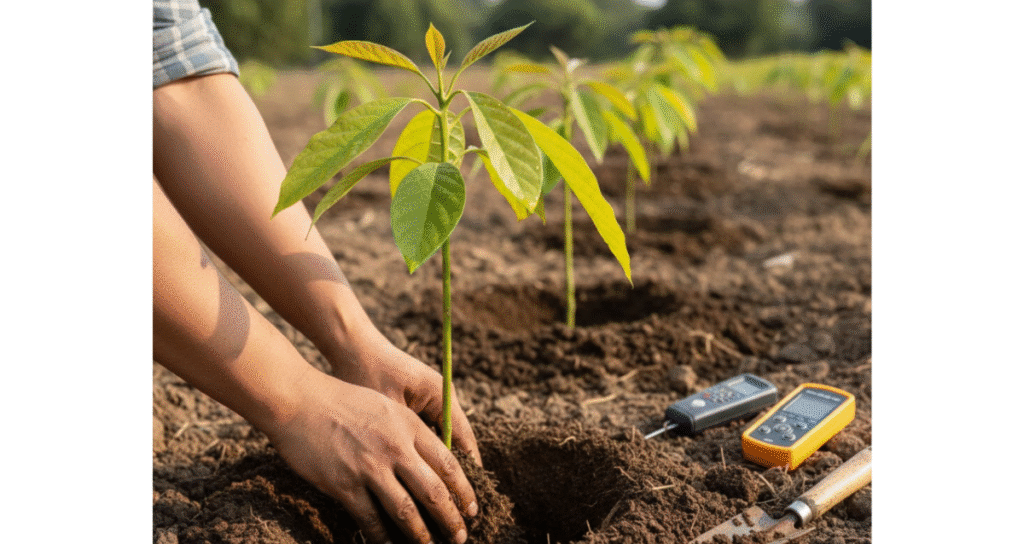
Step 3: Choosing the Right Avocado Varieties
Commercial success depends on planting high‑yield, market‑preferred avocado varieties suitable for Indian conditions. Grafted saplings ensure:
- Faster fruiting
- Consistent quality
- Better disease resistance
Independent challenge: Sourcing authentic, disease‑free saplings and ensuring correct planting density requires agricultural expertise.
Step 4: Irrigation & Water Management
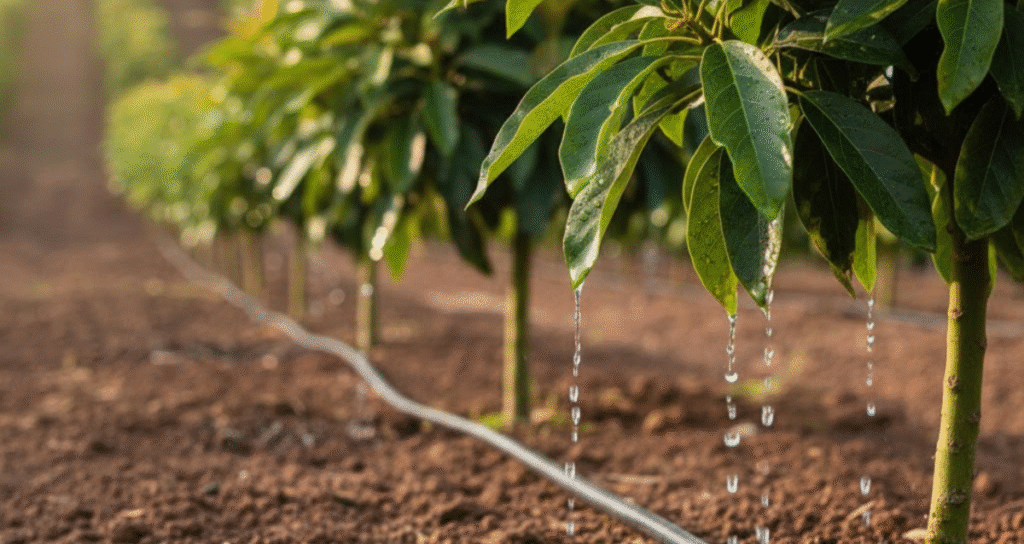
Avocado trees are sensitive to water stress. Efficient systems like drip irrigation are essential for:
- Root health
- Optimal growth
- Water conservation
Independent challenge: Installing and maintaining irrigation systems demands continuous supervision and maintenance.
Step 5: Crop Care, Nutrition & Pest Management
Successful avocado farming involves:
- Regular nutrient scheduling
- Organic and chemical pest control
- Seasonal monitoring
Neglecting any phase can directly impact yield and fruit quality.
Independent challenge: Farming is a year‑round responsibility, requiring skilled manpower and frequent on‑site decisions.
Step 6: Harvesting & Yield Management
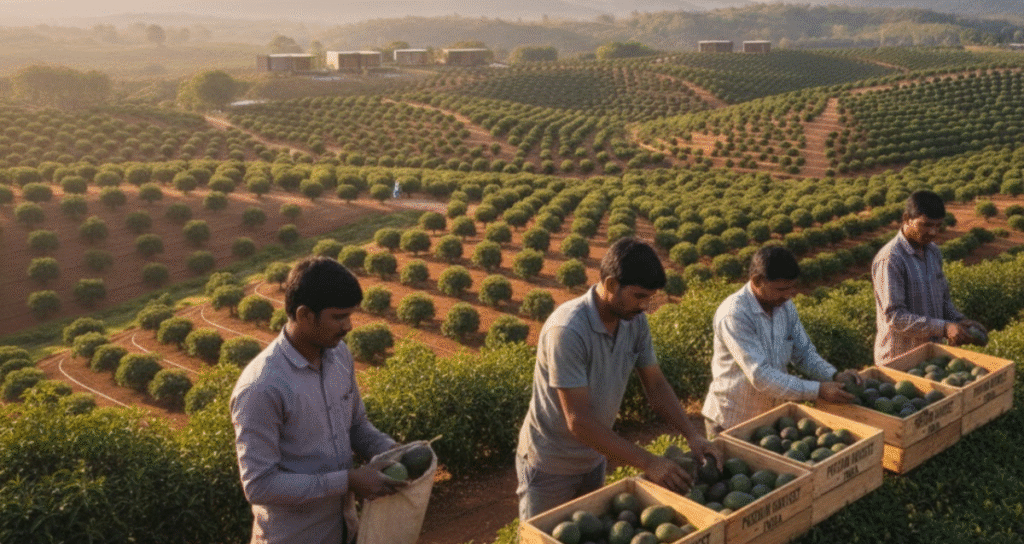
Avocados must be harvested at the right maturity stage and handled carefully. Harvest cycles, labor planning, and logistics play a major role in profitability.
Independent challenge: Coordinating labor, storage, and transport without local infrastructure can reduce margins.
Step 7: Marketing, Sales & Long‑Term Returns
Post‑harvest success depends on:
- Market access
- Price timing
- Consistent quality supply
This is where many individual farmland owners struggle the most.
Independent challenge: Selling produce at the right price without market connections often limits returns.
The Reality of Managing Farmland Independently
While avocado farming looks attractive on paper, independent landowners often underestimate:
- Daily operational involvement
- Dependence on local labor
- Agricultural risk management
- Time commitment over multiple years
For professionals, NRIs, and first‑time investors, managing farmland personally becomes impractical.
How Managed Farmland with Dhanveda Works
Dhanveda Farmlands offers a complete managed farmland investment model, where investors own agricultural land while Dhanveda handles everything end‑to‑end.
What Dhanveda Manages for You:
- Land selection & legal verification
- Plantation planning & crop execution
- Skilled on‑ground farm management teams
- Irrigation, nutrition & pest control
- Harvesting, storage & market linkage
More Than Farming: Lifestyle + Returns
Dhanveda Farmlands is not just about agriculture—it combines investment, lifestyle, and sustainability.
Additional Benefits:
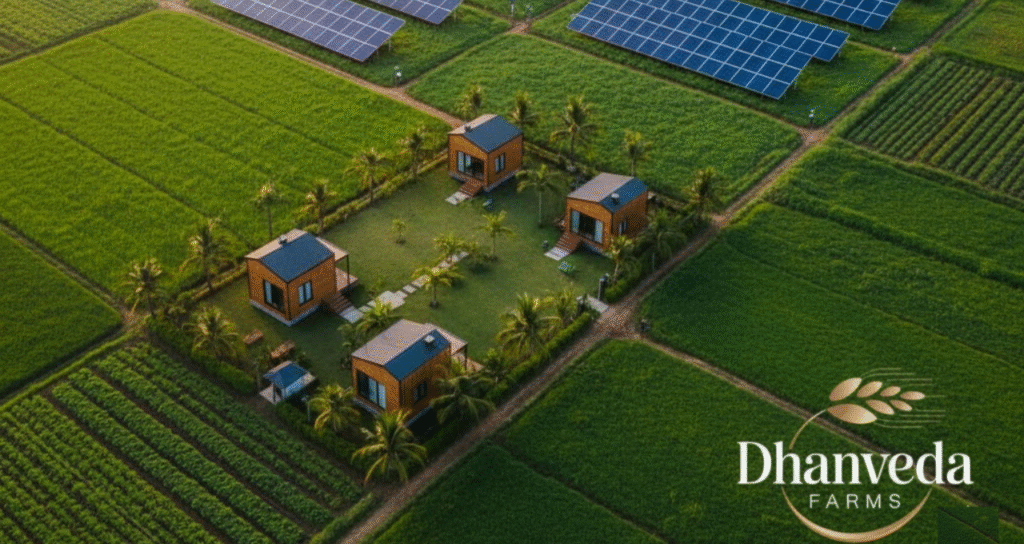
- On‑site cottages for stays
- Resort‑style amenities
- Green, nature‑centric community living
- Professionally maintained farmland
This creates both asset appreciation and passive agricultural income.
Why Investors Choose Dhanveda Farmlands
- Minimal involvement,
- professional execution
- Transparent farm operations
- Long‑term income‑generating assets
- Ideal for busy professionals & NRIs
- Sustainable and future‑ready investment
How Managed Farmland Works
Managed farmland is an investment model where the investor owns legally verified agricultural land, while a professional farmland operator manages all end-to-end farming activities. This includes land preparation, plantation, irrigation, crop care, harvesting, storage, and market linkage.
In a managed farmland setup with Dhanveda Farmlands, investors benefit from agricultural income and land appreciation without being involved in daily farm operations, making it ideal for busy professionals, first-time farmland investors, and NRIs.
A Smarter Way to Own Farmland
Avocado farming is a high‑potential opportunity—but only when executed correctly. Instead of managing land, labor, and logistics yourself, managed farmland with Dhanveda Farmlands allows you to enjoy the benefits of agriculture without the burden of daily operations.
If you’re looking to invest in farmland that delivers returns, lifestyle value, and peace of mind, managed farmland with Dhanveda is the smarter choice.
Frequently Asked Questions
Is managed farmland investment profitable in India?
Yes. Managed farmland can be profitable when executed professionally with the right crop selection, location, and long-term planning. High-value crops like avocados offer strong demand, premium pricing, and steady income potential when managed efficiently.
How long does avocado farming take to generate returns?
Avocado trees typically start yielding commercial harvests within 3 to 4 years when grafted saplings are used. Returns increase steadily as the trees mature, making it a long-term income-generating asset.
Who manages the farmland in a managed farmland model?
Is managed farmland suitable for NRIs and busy professionals?
Absolutely. Managed farmland is designed for investors who want exposure to agricultural returns without relocating or managing land personally. Periodic updates and transparent operations ensure peace of mind.
What is the investor’s role after purchasing managed farmland?
Once the investment is made, the investor’s role is minimal. Dhanveda handles operations, while investors benefit from crop income, asset appreciation, and optional lifestyle access to the farmland.