Guava farming has rapidly become one of India’s most stable and profitable agribusiness opportunities. Thanks to its low cultivation cost, early fruiting, and strong year-round demand, guava is considered a high-ROI crop for both farmers and farmland investors. For individuals looking to diversify their wealth through agricultural assets, guava farmland offers an ideal mix of annual income + long-term land appreciation.
Dhanveda Farmlands empowers investors by offering legally verified farmland, scientific guava plantation models, and complete farm management — ensuring consistent profits without operational involvement.
What Is Guava Farming and Why Is It Profitable?
Guava farming is the cultivation of guava trees—one of India’s most popular tropical fruits known for its flavor, nutritional value, and export potential.
Key Benefits of Guava Farming
- Thrives in a wide range of Indian climates
- Requires minimal agricultural inputs
- Suitable for both small and large-scale farmers
- High yield potential from early years
- Strong demand in fresh fruit, juice, pulp, and processing industries
India is already one of the largest producers of guava, making it a high-potential sector for investors looking to enter agribusiness.
How to Start Guava Farming: A Beginner-Friendly Step-by-Step Guide
Step 1: Choose the Right Location & Growing Conditions
Before planting a single tree, the foundation of guava farming starts with selecting land that supports fast growth and high-quality fruits.
Ideal Conditions for Guava:
- Temperature: 15°C to 35°C
- Rainfall: 800–1,000 mm annually
- Soil Type: Red soil, sandy loam, or any well-drained fertile soil
- pH Level: 6.0 to 7.5
- Sunlight: Guava thrives in full sunlight — unlike shade-loving crops
Avoid farmlands that stay waterlogged during monsoon. Guava roots need oxygen, and standing water can damage the orchard.
Step 2: Plan Your Orchard Layout & Setup the Plantation
After selecting the land, the next step is designing your orchard in a way that maximizes productivity.
Key Setup Requirements:
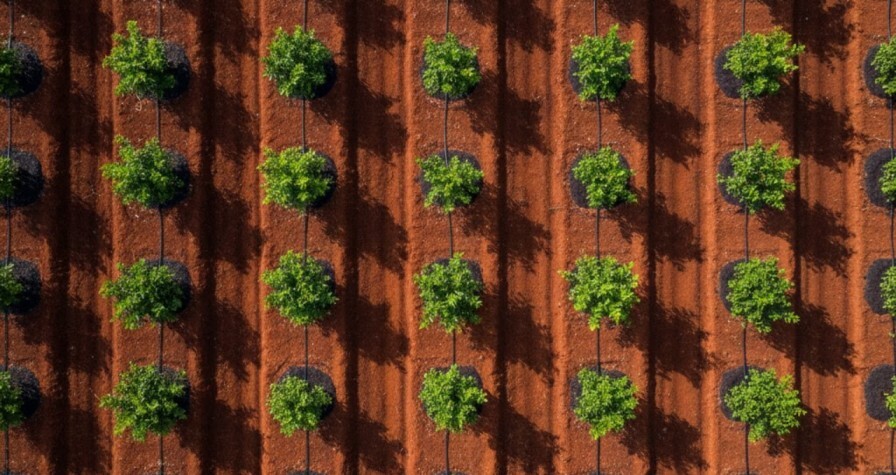
- Plant population: 300–450 trees per acre
- Spacing:
- 10 ft × 10 ft for high-density
- 12 ft × 12 ft for large-fruit varieties
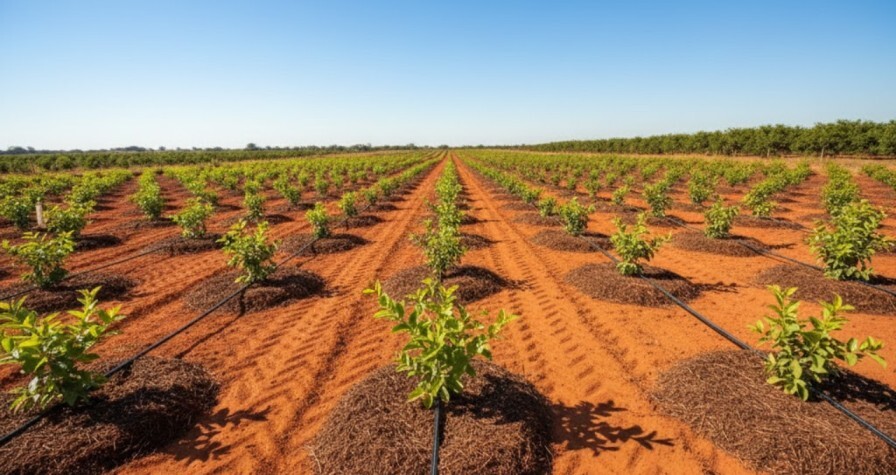
- Planting pits: 1.5 × 1.5 ft filled with organic compost
- Irrigation: Drip irrigation is ideal for continuous moisture
- Mulching: Helps control weed growth and saves water
Your initial expenses mainly cover:
- Land preparation
- Quality grafted saplings
- Drip system
- Farm labor
- Organic nutrients
Guava is affordable to start and easier to maintain compared to most fruit crops.
Step 3: Understand the Growth Cycle & Yield Stages
Guava trees start rewarding you faster than many fruit orchards — but the yield increases gradually.
Typical Growth & Income Stages
- Years 1:
Tree establishment, canopy building
No commercial yield - Year 2:
First round of fruiting
Small but promising income begins - Years 3:
Full orchard development
Steady, moderate income from larger harvests - Year 4 onwards:
Peak fruiting period
High productivity and the best profit window
A well-managed acre can produce 12–20 tonnes of guava per year, depending on the variety and pruning system used.
Step 4: Maintain the Orchard for Maximum Output
Guava farming becomes profitable when it is managed scientifically — especially in the areas of pruning and pest control.
Must-Do Orchard Practices:
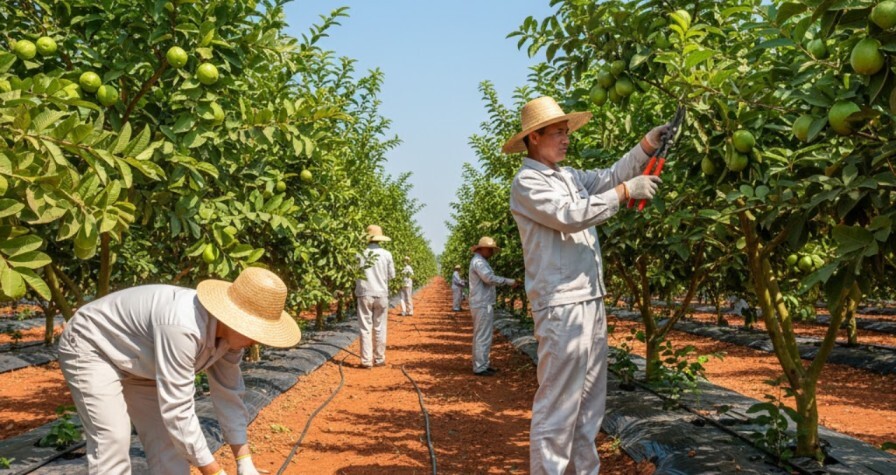
- Hard pruning in the off-season to shape the tree
- Bahaar management (scheduling flowering for better market price seasons)
- Fruit thinning for uniform size and premium quality
- Organic sprays to avoid fruit flies
- Consistent irrigation during fruit development
Harvesting Tips:
- Pick fruits when they turn light green or pale yellow
- Use soft crates to avoid bruising
- Sort and grade the fruits for higher-price markets
Great post-harvest handling = better profits and repeat buyers.
Best Investment Opportunity: Managed Guava Farmlands
For urban investors and NRIs, guava farming through a managed model is the most convenient investment.
Why investors prefer managed guava farmland:
- You own the farmland
- Professional team handles farming
- Guaranteed plant quality & scientific crop planning
- Annual agricultural income
- Zero operational stress
Dhanveda’s managed farmlands are designed to deliver predictable, long-term returns.
Guava Farming Profit per Acre in India
Estimated Annual Returns (Mature Orchard)
Average yield: 12–20 tons (12,000–20,000 kg) per acre
Market price: ₹20–₹60 per kg (varies by variety & season)
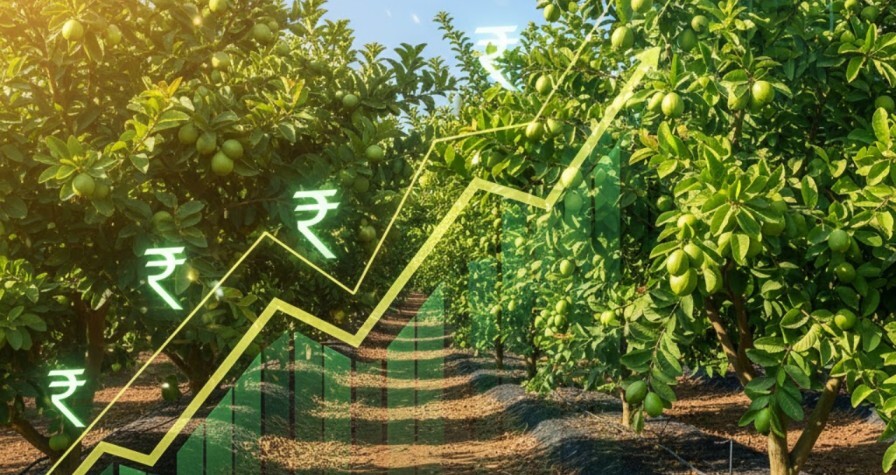
Gross revenue: ₹2.4 lakhs to ₹12 lakhs per acre per year
Annual Maintenance Costs
- Pruning, training & canopy management
- Irrigation, fertigation & mulching
- Organic manures, fertilizers & pest control
- Labour for harvesting, sorting & packing
Net Profit Potential:
₹2.5 lakhs to ₹6 lakhs per acre annually (fully mature orchard)
Challenges in Guava Farming & How Dhanveda Solves Them
| Key Challenges in Guava Farming | How Dhanveda Farmlands Solves It |
|---|---|
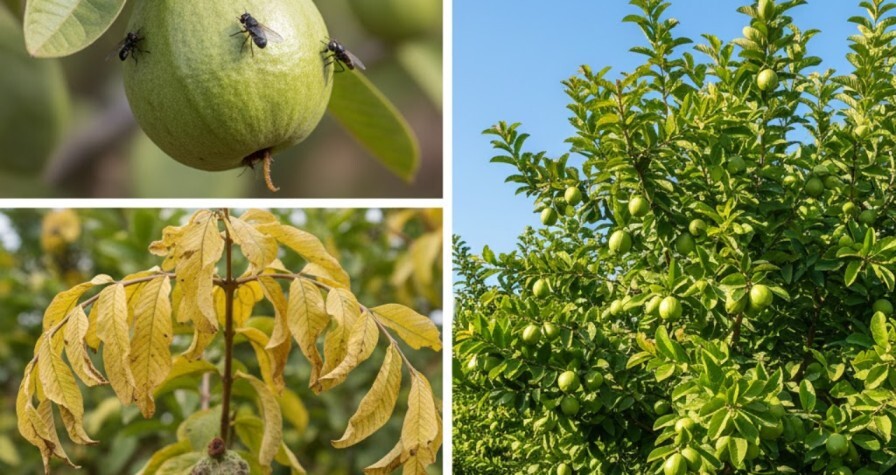
| Fruit fly infestation | Integrated Pest Management (IPM) with organic and targeted control |
| Guava wilt & root diseases | Soil testing, disease-resistant varieties & preventive treatments |
| Irregular watering / drought stress | Automated drip irrigation for consistent moisture & healthier fruits |
| Low-quality saplings used by farmers | Plantation with certified, high-yield grafted guava varieties |
| Lack of proper pruning & canopy management | Scientific pruning & training by expert agronomists |
| Labour shortages during peak season | Dedicated farm management team handling all seasonal operations |
| Poor post-harvest handling & logistics | Efficient harvesting, sorting, grading & quick transportation systems |
Why Choose Dhanveda Farmlands for Guava Farming?
Dhanveda Farmlands provides a fully managed guava farming ecosystem designed to maximize yearly income, ensure crop health, and create long-term asset appreciation — all without requiring your daily involvement.
What Dhanveda Handles for You
- Scientific land development and premium guava plantation
- Daily farm operations managed by trained agronomy teams
- Drip irrigation, pruning, fertigation & canopy management
- Pest and disease control using integrated organic methods
- Seasonal harvesting, sorting, grading & market-ready packing
- Transparent farm updates, drone footage & performance reports
Beyond Farming: Lifestyle & Asset Value
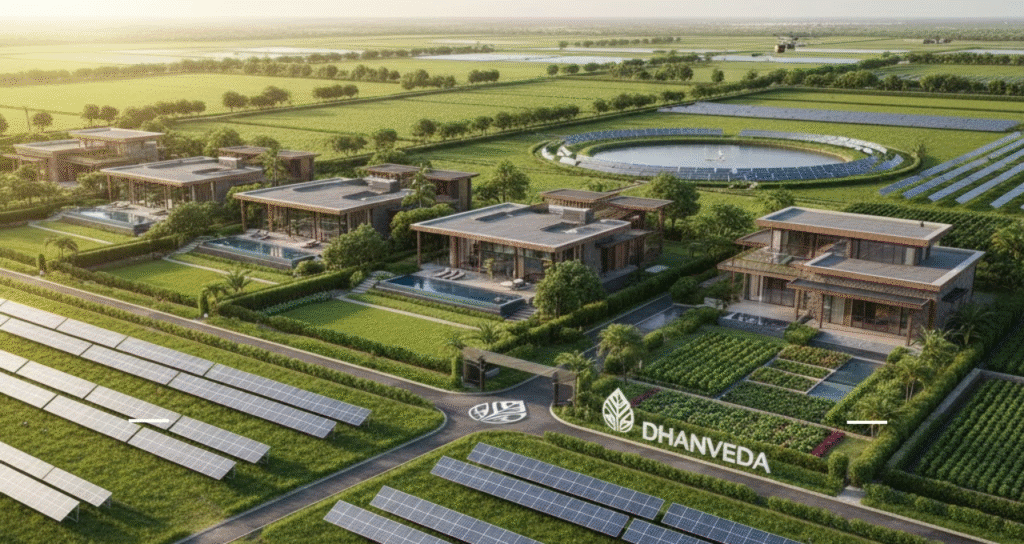
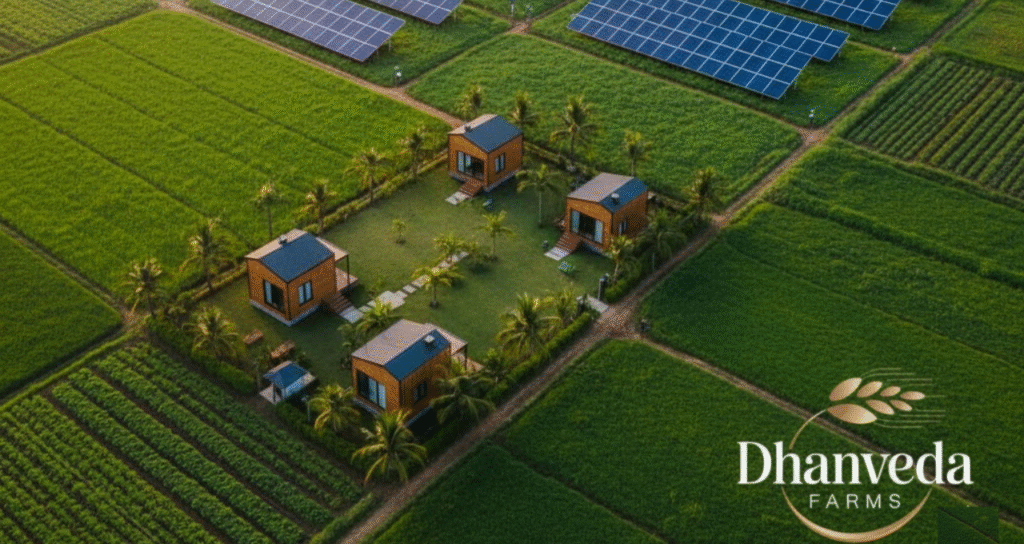
- Dedicated farm cottages for owners to stay and experience farm life
- Resort-style amenities integrated within the farmland community
- Professionally secured, gated farmland with continuous supervision
- Steady land value appreciation along with annual guava farm income
With Dhanveda Farmlands, investors enjoy high returns, complete transparency, and absolutely zero operational stress — all while owning a future-proof agricultural asset.
Challenges in Guava Farming & How Dhanveda Solves Them
Guava farming is a powerful wealth-building strategy for anyone looking to invest in agriculture. Early yields, high annual profits, and long-term productivity make guava one of the best crops for farmland investors. By choosing Dhanveda Farmlands, you combine the safety of owning land with the profitability of expert-managed guava farming — enabling consistent passive income for decades.
If you’re ready to invest in a smart agricultural asset, guava farmland with Dhanveda is your ideal gateway to long-term prosperity.
FAQS
Is guava farming profitable in India?
Yes, guava farming is highly profitable when managed scientifically. A mature guava orchard can generate ₹2.5–6 lakhs net profit per acre annually, depending on variety, yield quality, and farm management.
How long does guava farming take to generate income?
Guava farming typically starts giving income from the 3rd year, with peak returns from the 5th year onward. Guava trees remain productive for 20–25 years with proper maintenance.
What are the risks in guava farming?
Common risks include fruit fly attacks, guava wilt, irregular watering, labour shortage, and poor post-harvest handling. These challenges are greatly minimized through expert supervision and scientific management.
Is managed guava farmland a good investment?
Yes, managed guava farmland is ideal for investors who want annual passive income, long-term land appreciation, low maintenance, and a hands-free farming experience without day-to-day involvement.
How does Dhanveda Farmlands manage guava farming?
Dhanveda handles land development, plantation with premium varieties, daily farm operations, pruning, irrigation, pest control, harvesting, sorting, and grading—while also providing transparent updates, drone reports, and premium on-site amenities for landowners.