

Cocoa farming in India can generate ₹1–1.6 lakhs net profit per acre annually after maturity, but it requires 3–5 years, skilled labour, and continuous supervision. Dhanveda Farmlands eliminates this complexity by offering fully managed cocoa farmland—handling farming operations, manpower, processing, and maintenance—so investors earn agricultural returns with minimal involvement.
Cocoa farming profit has become a growing topic among investors looking for sustainable, long-term agricultural returns in India. With rising global chocolate demand, cocoa cultivation—when done correctly—can generate attractive profits. However, independent cocoa farming requires significant time, expertise, manpower, and operational commitment.
This how-to guide explains:
- How cocoa farming generates profits in India
- Step-by-step costs, timelines, and yield expectations
- The real effort required to manage cocoa farmland on your own
- How Dhanveda Farmlands simplifies cocoa farming through a fully managed farmland model
What Is Cocoa Farming and Why Is It Profitable?
Cocoa (Theobroma cacao) is a high-value plantation crop primarily grown in tropical regions. In India, cocoa is cultivated as an intercrop under coconut, arecanut, or banana plantations, especially in Kerala, Karnataka, Andhra Pradesh, and Tamil Nadu.
Key Reasons Cocoa Farming Is Profitable
- Growing domestic and export demand from chocolate and FMCG brands
- Cocoa trees produce for 20–25 years once established
- Intercropping increases land productivity
- Premium prices for quality fermented beans
When managed professionally, cocoa farming profit margins can be attractive over the long term.
How to Start Cocoa Farming: Step-by-Step
Step 1: Land Selection and Climate Requirements
Cocoa requires:
- Warm, humid climate (20–30°C)
- Annual rainfall of 1,500–2,000 mm
- Well-drained loamy soil with good organic content
- Partial shade (ideal under coconut or arecanut trees)
Choosing the wrong land can severely impact yield and profitability.
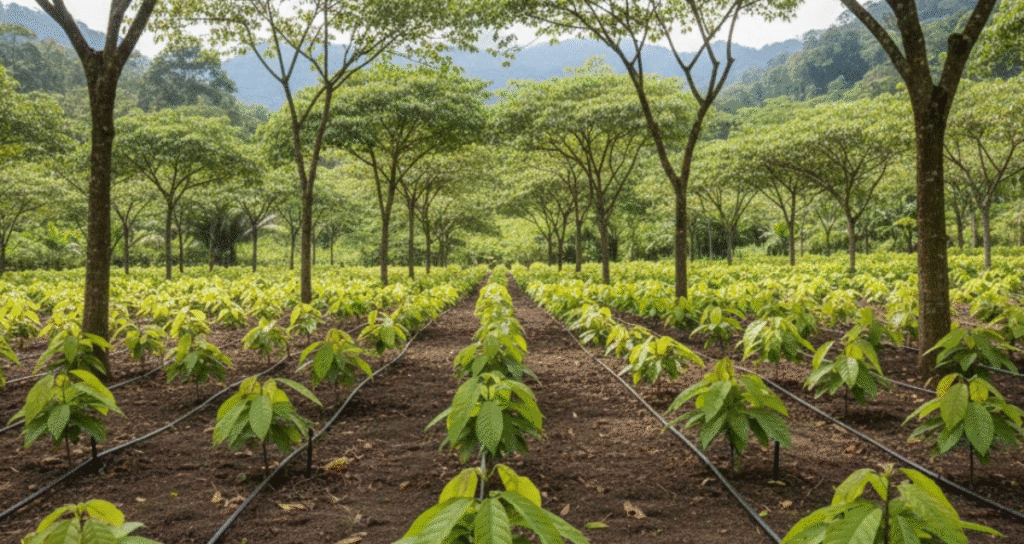
Step 2: Plantation Setup and Initial Investment
Planting density: 500–600 cocoa plants per acre (as intercrop)
Initial costs typically include:
- Land preparation
- Quality saplings
- Shade management
- Drip irrigation setup
- Organic inputs and fertilizers
Cocoa farming requires patience—returns do not start immediately.
Step 3: Growth Timeline and Yield Expectations
| Year | Activity | Income |
|---|---|---|
| Year 1–2 | Plant establishment & maintenance | No income |
| Year 3 | Initial flowering and pods | Low income |
| Year 4–5 | Commercial harvesting begins | Moderate income |
| Year 6+ | Peak production | High income |
A mature cocoa plantation can yield 600–1,000 kg of dry cocoa beans per acre annually, depending on management quality.
Step 4: Harvesting, Fermentation & Drying
Profitability depends heavily on post-harvest management, including:
- Timely harvesting of ripe pods
- Proper bean fermentation (5–7 days)
- Controlled sun-drying
Without expertise, farmers often lose value due to poor quality beans.
Cocoa Farming Profit per Acre in India
Estimated Annual Returns (Mature Plantation)
- Average yield: 800 kg/acre
- Market price: ₹200–₹300 per kg (varies by quality)
Gross revenue: ₹1.6–2.4 lakhs per acre per year
Annual Maintenance Costs
- Labour and supervision
- Fertilizers and pest control
- Irrigation and farm upkeep
Net profit potential: ₹1–1.6 lakhs per acre annually
These figures depend strongly on professional farm management.
The Hidden Challenges of Independent Cocoa Farming
While cocoa farming profit looks attractive on paper, managing it independently involves:
- Daily farm supervision
- Skilled labour availability
- Weather and pest risks
- Post-harvest expertise
- Market access and price fluctuations
For working professionals, NRIs, or first-time investors, this becomes difficult to manage remotely.
How Managed Farmland Solves These Challenges
Managed farmland allows investors to own agricultural land while professionals handle end-to-end operations.
What Managed Cocoa Farming Includes
- Scientific plantation planning
- Experienced farm managers
- Regular maintenance and harvesting
- Quality control and yield optimization
- Transparent reporting and returns
This model converts active farming into a passive agricultural investment.
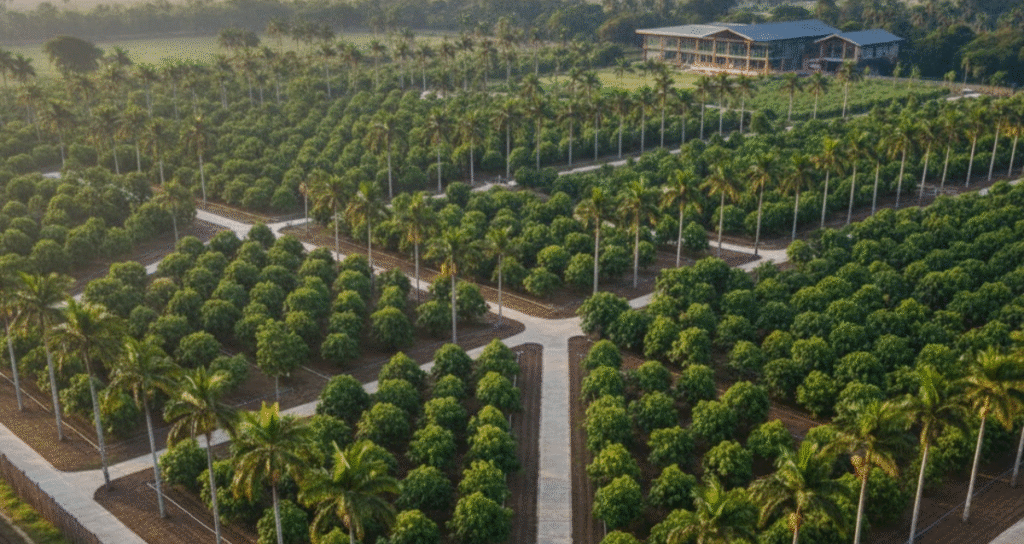
Why Choose Dhanveda Farmlands for Cocoa Farming?
Dhanveda Farmlands offers a complete managed farmland ecosystem designed for long-term profitability and peace of mind.
What Dhanveda Handles for You
- Land development and cocoa plantation
- Daily farm operations and skilled manpower
- Sustainable and organic farming practices
- Harvesting, processing, and yield optimization
- Transparent farm updates and performance tracking
Beyond Farming: Lifestyle & Asset Value
- On-site cottages for owners
- Resort-style amenities within the farmland
- Secure, professionally maintained gated farmland
- Appreciation of land value alongside farm income
With Dhanveda, investors enjoy returns without operational stress.
Cocoa Farming with Dhanveda: Returns with Minimal Involvement
Unlike traditional farming, Dhanveda’s managed farmland model ensures:
- No daily supervision needed
- No dependency on local labour management
- No need for agricultural expertise
- Predictable long-term income potential
You benefit from cocoa farming profit while Dhanveda manages everything on the ground.
Is Cocoa Farming a Good Investment for You?
Cocoa farming is ideal if you are looking for:
- Long-term, inflation-resistant returns
- Sustainable and real-asset investments
- Passive income from agriculture
- Land ownership with professional management
Managed cocoa farmland bridges the gap between investment and agriculture.
Cocoa Farming Profit Made Simple
Cocoa farming can be highly rewarding—but only when managed correctly. Independent farming demands time, effort, and deep agricultural knowledge.
Dhanveda Farmlands transforms cocoa farming into a hassle-free, professionally managed investment—combining agricultural returns, land appreciation, and lifestyle value.
If you want to benefit from cocoa farming profit without the operational burden, managed farmland with Dhanveda is the smarter way forward.
Frequently Asked Questions
Is cocoa farming profitable in India?
Yes, cocoa farming is profitable in India when managed scientifically. A mature plantation can generate ₹1–1.6 lakhs net profit per acre annually, depending on yield quality, market prices, and farm management.
How long does cocoa farming take to generate income?
Cocoa farming typically starts yielding income from the 3rd year, with peak commercial returns from the 5th year onward. Cocoa trees remain productive for 20–25 years.
What are the risks in cocoa farming?
Major risks include climate variability, pest attacks, labour dependency, and poor post-harvest processing. These risks are significantly reduced under a managed farmland model.
Is managed cocoa farmland a good investment?
Yes, managed cocoa farmland is ideal for investors seeking long-term passive income, land appreciation, and sustainable returns without daily farm involvement.
How does Dhanveda Farmlands manage cocoa farming?
Dhanveda handles land development, plantation, daily farm operations, skilled manpower, harvesting, and quality control—while providing transparent updates and on-site amenities for landowners.